Floor Insulation
Floor insulation is an effective way to improve comfort, reduce heat loss, and create a warmer home from the ground up. Whether your property has a suspended timber floor, a solid floor slab, insulating at floor level helps prevent cold surfaces and unwanted draughts.
When is the best time to think about floor Insulation?

Floor insulation is easiest and most cost effective when it can be combined with other planned works. If you are already upgrading floors, it is often the perfect opportunity to improve comfort and performance at the same time.
You are installing underfloor heating and want the system to run efficiently
You are replacing flooring or lifting floorboards during renovation
You are refurbishing a kitchen or bathroom where floors may already be coming up
You are improving a suspended timber floor or addressing draughts at ground level
Rooms regularly feel cold underfoot, even when the heating is on
In combination with floor insulation, at wrapt we install underfloor heating, flooring, kitchen, bathrooms. Making your project easy to deliver with one point of contact.
Benefits
-
Insulating beneath the floor reduces cold surfaces and makes rooms feel much more comfortable, especially in winter.
-
Many suspended floors allow outside air movement through gaps. Floor insulation helps reduce unwanted draughts and improves airtightness.
-
Less heat is lost through the ground floor, meaning the home needs less energy to stay warm.
-
Floor insulation is a key fabric measure alongside loft and wall insulation, helping homes reach EPC improvement targets.
-
A well insulated floor improves the effectiveness of underfloor heating and heat pumps by reducing heat demand.

Get an instant estimate for your project
Whats involved:
Floor insulation needs careful detailing to ensure warmth, ventilation (if required), and long term durability.
1. Survey and floor type assessment
We begin by checking whether the property has a suspended timber floor or a solid floor slab, as the approach differs.
2. Insulating between the joists or above a solid floor.
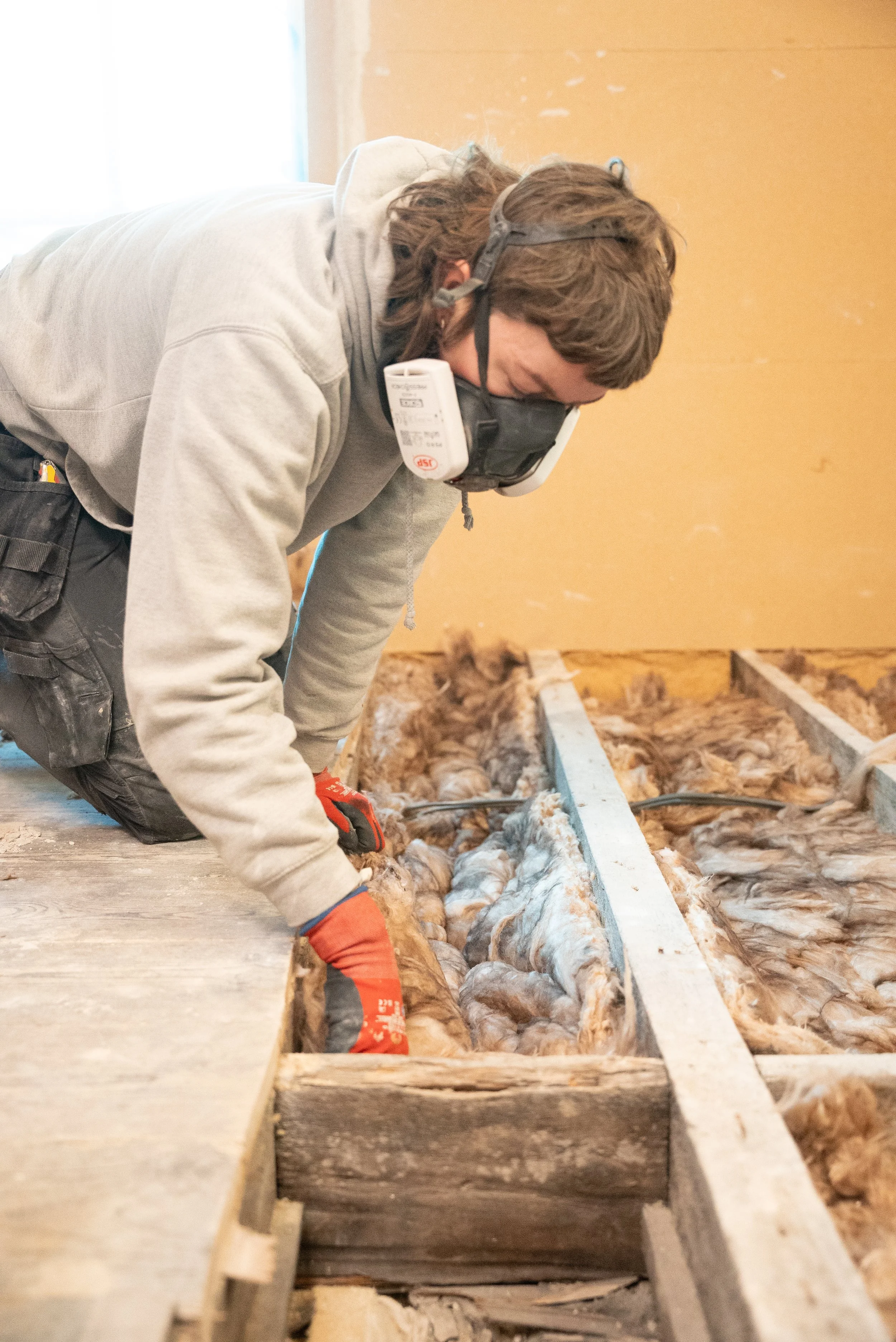
For suspended floors, insulation is installed between the joists, supported with breather membrane below to stop insulation being undermined by draughts.
For solid floors we use a range of water proof insulations topped by a lime or cement screed. Its common that the floor may need excavating by 20-30cm to enable a solid floor insulation install.
3. Maintaining subfloor ventilation
Traditional suspended floors require ventilation beneath to prevent moisture build up. Insulation must be installed without blocking air bricks or airflow paths. This can require extra air bricks being added to your subfloor.
4. Airtightness and draught sealing at floor level
We address gaps at floor edges, service penetrations, and skirting junctions to reduce draughts while maintaining appropriate ventilation below.
5. Underfloor heating (if required)
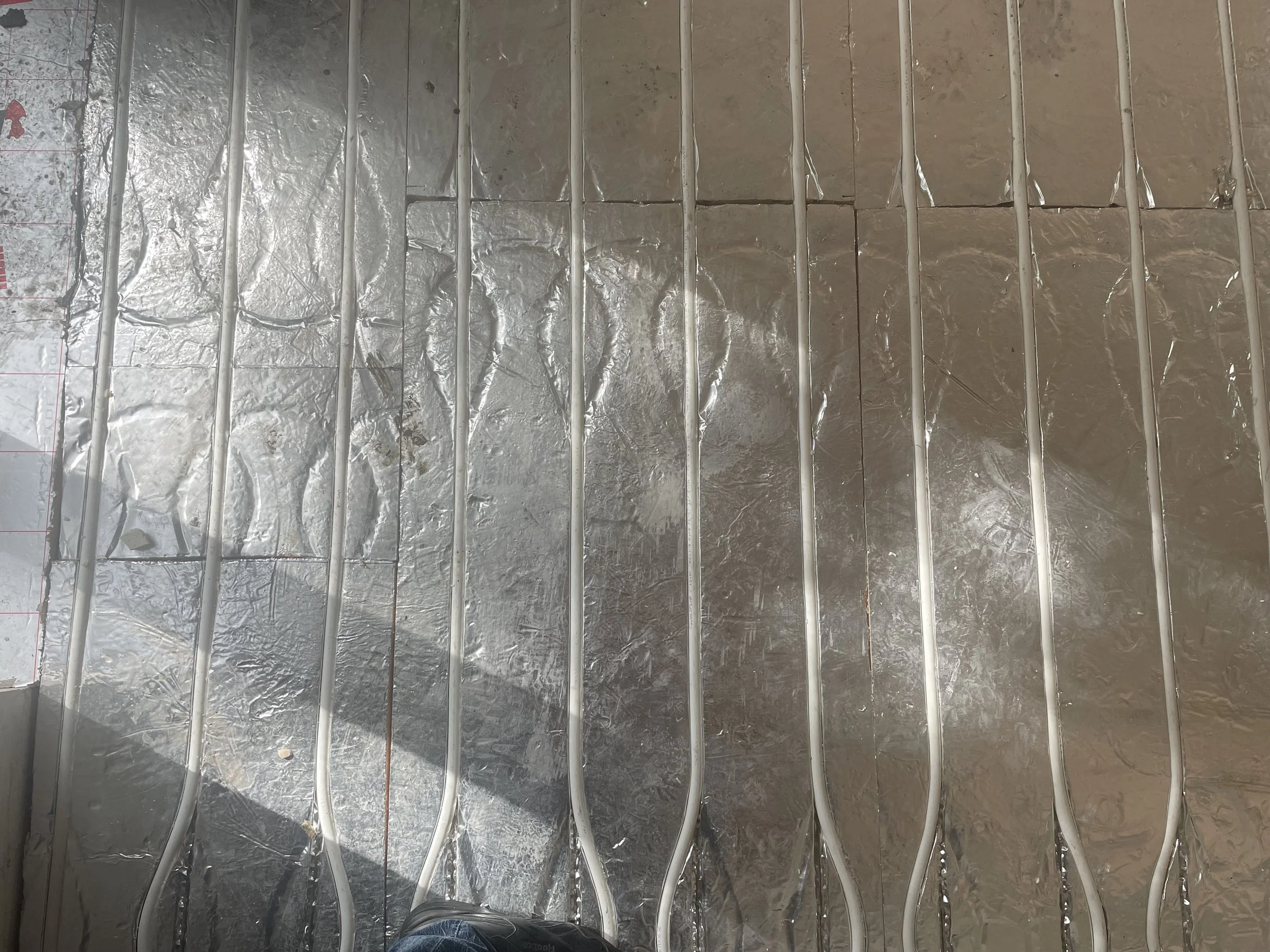
Once the floor is insulated the underfloor heating pipes are laid before the floor finish goes down.
5. Reinstatement and finish
Floorboards or finishes are either re-instated or a new floor finish put in place.