How a 14% drop in heating demand came down to six smart air bricks
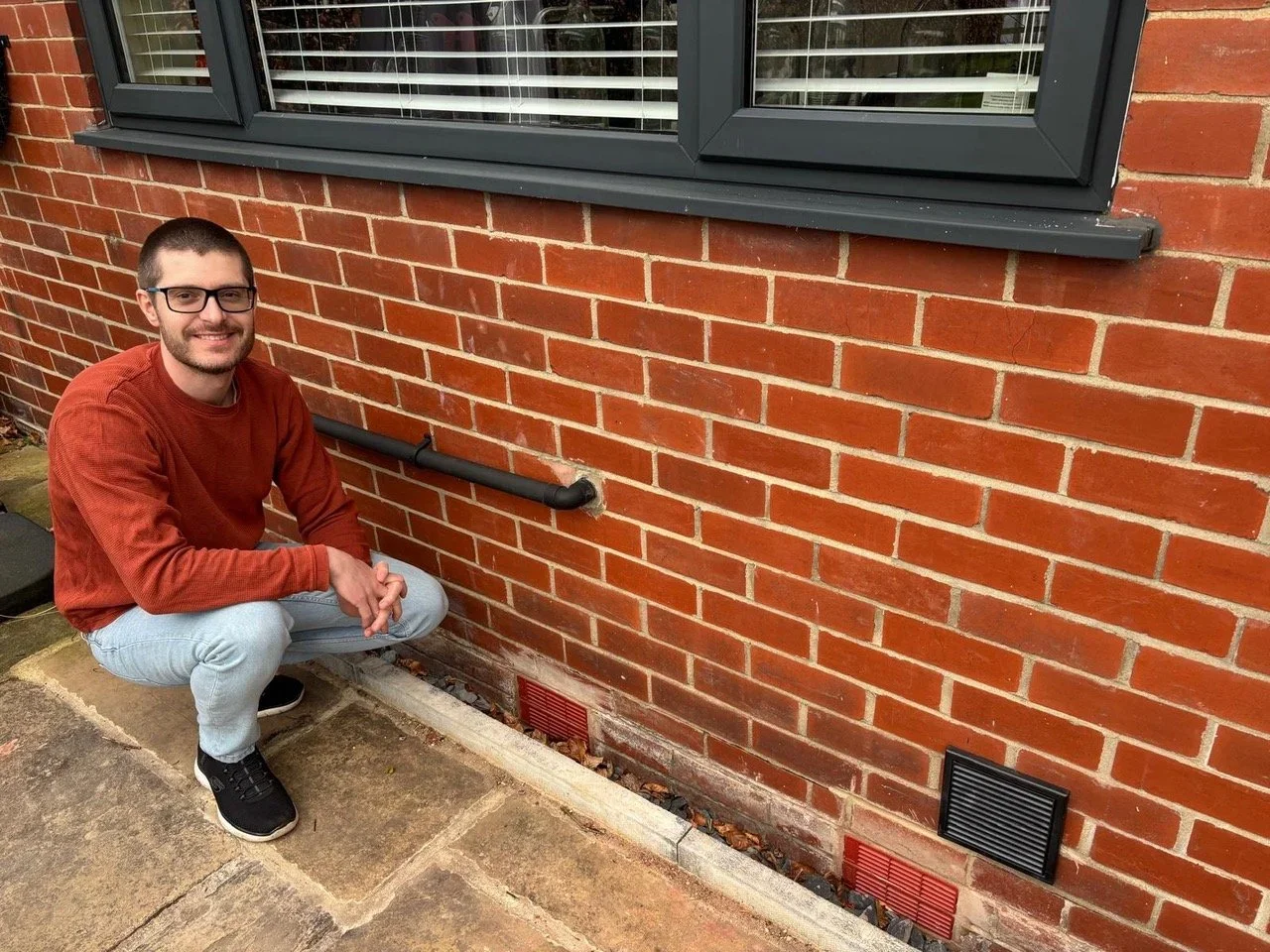
We're always keen to explore new technology and this one really supprised us with the results. The home is a 1930s detached home in West Yorkshire where the homeowner had already made real progress on their retrofit journey, but still had a stubborn problem to solve.
The Property
The five-bedroom home had been significantly modified over the years, adding character but also complexity. Since moving in during 2020, the owner had already invested in a heat pump, a 2kW solar array, upgraded loft insulation and a high-spec garage conversion. Despite all of that, the floors remained a persistent issue, especially in the kitchen, which struggled to reach comfortable temperatures in winter.
The property has suspended timber floors ventilated by standard air bricks, which are standard for homes of this age and important for preventing moisture build-up. A few of the air bricks at the rear had been inadvertently blocked, and when they were reopened to restore proper ventilation, the kitchen became noticeably colder as a result. Engineered wood flooring had also been laid without insulation beneath it, compounding the problem.
With a heat pump and electric vehicle on site, energy costs were already significant, and rising electricity prices had made tackling the floor heat loss more pressing.
Finding the Right Solution
Several options were considered and ruled out. Spray foam insulation raised concerns around cost and long-term implications for the property. Laying insulation below the floor manually was explored, but limited crawl space made it impractical and with the new flooring just fitted the client didn't want to risk damaging this by insulating from above.
AirEx Floorvent emerged as the right fit. Rather than blocking airflow entirely, it regulates ventilation more intelligently, reducing unnecessary heat loss while maintaining adequate underfloor air movement. Crucially, it could be installed without major disruption.
Installation
We installed six AirEx Floorvent units, replacing the existing air bricks one by one. Care was taken to preserve the property's original brickwork throughout. The job was completed cleanly and with minimal disruption to the household over the course of two days.
The Results
The improvement in comfort was immediately noticeable. The kitchen, which had previously struggled to get above 19°C in winter, now consistently reaches above 20°C. That shift, combined with a meaningful reduction in draughts, has made a real difference to how the space feels day to day.
On energy performance, the results were equally clear. At an outdoor temperature of 6°C, daily heating demand through the heat pump dropped from 35 kWh to 30 kWh, a reduction of around 14%. That improvement also allowed the homeowner to lower the heat curve on the heat pump, helping it run at lower flow temperatures and operate more efficiently overall.
Not every home will be a candidate for this approach, but for the right property it can deliver real results with minimal fuss. If you're not sure where to start, a good energy assessment, like our Home Energy Action Plan, can help identify the most appropriate measures for your home before you commit to anything.